
Mouth problems can start without warning, so many people do not know how urgent their symptoms are. Recognizing when to see a dentist immediately helps protect your smile and prevent lasting damage. Minor sensitivity may wait for a routine checkup, but some problems need quick professional care.
Choose emergency dental care for ongoing swelling, uncontrolled bleeding, or jaw trauma. Ignoring these signs can cause serious infections or permanent tooth loss. Also, severe tooth pain that interrupts sleep or daily activities shows that you need help.
Dental crises can happen on weekends or late at night. Quick action limits complications and may prevent complex, costly procedures later. Trust your instincts when your mouth feels wrong; early care offers the best defense against declining oral health.
Key Takeaways
- Distinguish between minor discomfort and true dental emergencies.
- Seek help for swelling, bleeding, or intense pain.
- Timely treatment prevents the need for invasive procedures.
- Dental emergencies can happen outside of standard office hours.
- Protect your oral health by acting fast during a crisis.
When to see a dentist immediately: Recognizing urgent warning signs
Knowing warning signs of a dental crisis can help prevent extra pain and complex procedures. Some oral problems can wait for a routine check-up, but others need prompt care. These signs help you tell minor discomfort from a true emergency.
Severe tooth pain that does not improve
Severe tooth pain that continues despite over-the-counter medicine is a major warning sign. If pain stops you from sleeping, eating, or doing daily tasks, it may signal deep decay or nerve damage. Do not ignore this discomfort because it rarely goes away by itself.
Swollen gums, face, jaw, or neck
Swollen gums and face are classic signs of dental infection that need prompt evaluation. If swelling reaches the jaw or neck, the infection may spread beyond the tooth root. It can worsen quickly and needs professional care to stop further spread.
Fever, chills, fatigue, or a bad taste in the mouth
Fever, chills, and ongoing fatigue often occur with a serious oral infection. A foul, metallic, or salty taste can signal an abscess. These signs mean your body may be fighting a large number of bacteria and needs medical attention.
Difficulty breathing, swallowing, speaking, or opening the mouth
Any trouble breathing, swallowing, speaking, or opening your mouth is a critical medical emergency. Swelling in the mouth floor or throat can block your airway and threaten your life. Seek emergency hospital care immediately if these symptoms occur.
Uncontrolled bleeding or sudden oral swelling
Uncontrolled bleeding after an injury or dental procedure is never normal. Rapid mouth swelling may signal a hematoma or severe allergic reaction, requiring urgent assessment. Care can stabilize the area and stop the bleeding.
| Symptom | Urgency Level | Recommended Action |
|---|---|---|
| Severe tooth pain | High | Contact dentist today |
| Facial swelling | Critical | Seek emergency care |
| Fever with toothache | High | Immediate evaluation |
| Difficulty breathing | Emergency | Go to hospital ER |
Signs of dental infection that require prompt treatment
Many patients underestimate how quickly a simple toothache can become a serious health crisis. Recognizing the early signs of dental infection helps prevent the infection from spreading. When bacteria reach deep tooth or gum tissue, the condition can worsen within hours.
How tooth decay can progress into an abscess
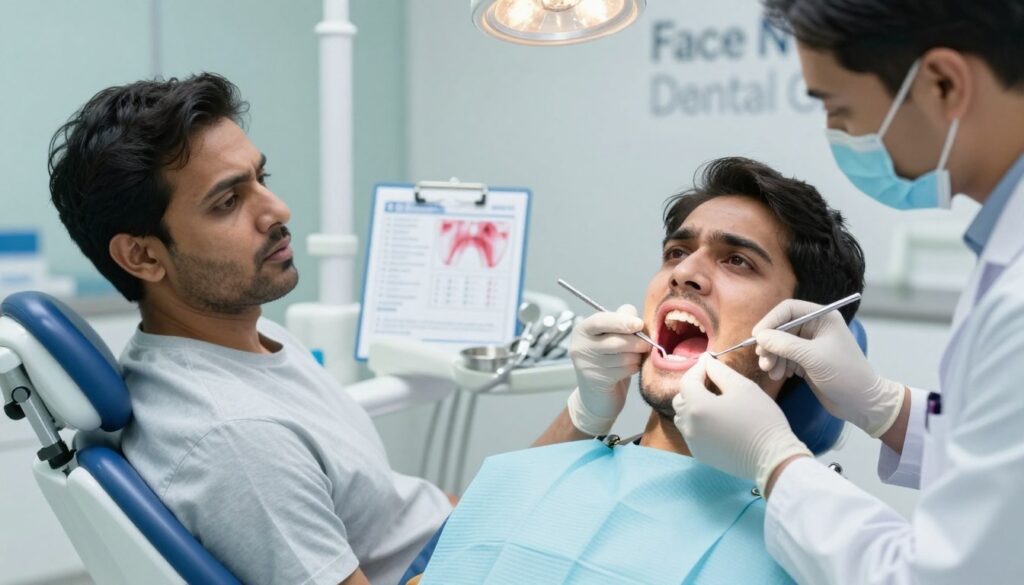
Tooth decay starts as a small cavity that wears through enamel. Without treatment, bacteria reach the pulp chamber, causing inflammation and eventual tissue death. This process often causes a painful abscess, a pus-filled pocket at the root tip.
Symptoms of a gum infection or periodontal emergency
A periodontal emergency may create deep pockets between the teeth and gums. You might notice lasting bad breath, a foul taste, or gums that bleed easily. Trapped infection can cause significant swollen gums and face, showing it has spread beyond one area.
Why facial swelling and fever can signal a spreading infection
As infection spreads, your body may develop fever, chills, and fatigue. Swelling that moves from the tooth to the jaw or neck shows deeper tissue invasion. This warning means your immune system is struggling to contain the bacteria.
When a dental infection may become a medical emergency
Some symptoms show that a dental problem has become a life-threatening medical emergency. You must recognize these signs to receive the right level of support.
Call emergency services for breathing or swallowing difficulty
If your airway feels restricted, seek immediate help at the nearest hospital. Difficulty breathing or swallowing may mean the infection blocks your throat and needs urgent treatment.
Seek same-day emergency dental care for rapidly worsening swelling
If swelling worsens quickly but does not affect breathing, seek emergency dental care. A dentist can drain the infection and stabilize your condition before it worsens.
Risks of delaying antibiotics, drainage, root canal treatment, or extraction
Antibiotics can help control spreading bacteria, but they cannot cure the underlying cause. Medication alone leaves you vulnerable to repeat infections without a root canal or extraction. Proper drainage may be the only way to relieve pressure and help the tissue heal.
| Infection Stage | Primary Symptom | Recommended Action |
|---|---|---|
| Early Decay | Sensitivity | Routine Dental Visit |
| Abscess Formation | Throbbing Pain | Urgent Dental Care |
| Spreading Infection | Fever and Swelling | Emergency Medical/Dental |
| Airway Obstruction | Difficulty Breathing | Hospital Emergency Room |
Dental injuries and sudden problems that should not wait
When a dental injury occurs, the speed of your response is the most critical factor in saving your smile. Sudden mouth trauma can frighten you, but staying calm and seeking emergency dental care quickly often improves treatment results.
What to do when a permanent tooth is knocked out
A knocked-out permanent tooth is a time-sensitive emergency. If you act within the first hour, the chances of successfully replanting the tooth increase significantly.
Handle the tooth by the crown and keep it moist
Always pick up the tooth by the crown, which is the chewing surface, rather than the root. Touching the root can damage the delicate tissues needed for reattachment.
Keep the tooth moist at all times. Place it in milk, or hold it inside your cheek as an adult if you can avoid swallowing it.
Why immediate treatment improves the chance of saving the tooth
Professional intervention is vital because the cells on the root surface begin to die once they dry out. Prompt professional care allows a dentist to stabilize the tooth in its socket before permanent damage occurs.
Cracked, fractured, or severely loosened teeth
Even if a crack seems minor, it can expose the inner pulp of the tooth to bacteria. A tooth that feels loose after an impact needs urgent assessment to prevent displacement or nerve damage.
Lost fillings, crowns, bridges, or dental implants
Losing a restoration can leave your tooth structure vulnerable to sensitivity and decay. If you lose a crown or filling, keep it safe and contact your clinic for emergency dental care. A dentist can recement or replace it.
Soft-tissue cuts, bitten lips, and bleeding after an injury
Injuries to the tongue, lips, or cheeks often bleed heavily because the mouth has a high blood supply. Apply firm, direct pressure with a clean cloth to control the bleeding while you prepare to visit a professional.
Severe pain after a dental procedure
While some discomfort is normal after treatment, sharp or throbbing pain that does not subside may indicate a complication. Do not ignore persistent pain; it could signal an infection or healing problem needing immediate attention.
How to respond while arranging emergency dental care in India
When to see a dentist immediately matters during a dental emergency in India. Stay calm and act quickly to protect your oral health. If you have severe tooth pain or sudden trauma, seek professional help at once.
Contact a dentist, dental hospital, or emergency dental clinic promptly
Contact your local dental practitioner or a nearby multi-specialty hospital right away. Many urban centers in India now offer 24/7 emergency dental care services for urgent cases. Do not wait for pain to subside, because early treatment often prevents further complications.
Safe short-term measures for severe tooth pain
While traveling to the clinic, use simple, safe methods to manage discomfort. These temporary steps do not replace a professional diagnosis.
Use a cold compress for swelling caused by injury
If an injury causes swollen gums and face, apply a cold compress outside your cheek. Hold it on for 15 minutes, then off for 15 minutes, to reduce swelling and numb the area.
Rinse gently with warm salt water when appropriate
A gentle warm salt water rinse can clean the area and soothe irritated tissue. Mix half a teaspoon of salt in a glass of warm water, then swish carefully.
Use over-the-counter pain medicine only as directed
You may take standard over-the-counter pain relievers to manage discomfort. Follow the label directions, and make sure the medicine does not conflict with your health conditions.
What not to place on a tooth or swollen gum
Do not place aspirin, cloves, or household adhesives directly on the tooth or gum. These substances can cause chemical burns or further irritation. Use external cooling methods until you reach a professional.
Information to provide when requesting an urgent appointment
When requesting an appointment, speak clearly and briefly. Accurate details help staff prepare for your arrival and prioritize your needs.
Describe the pain, swelling, fever, bleeding, or injury
Explain your symptoms and how long they have lasted. Mention any fever or spreading swelling, since these signs matter to the dentist.
Share current medicines, allergies, medical conditions, and pregnancy status
Share your medical history, current medicines, allergies, conditions, and pregnancy status. This information protects you, especially if you need anesthesia or emergency surgery.
When to go directly to a hospital emergency department
For severe trauma, including a broken jaw, difficulty breathing, or uncontrollable bleeding, go straight to the nearest hospital emergency department. These facilities can handle life-threatening situations requiring immediate medical stabilization.
| Condition | Action Required | Urgency Level |
|---|---|---|
| Severe tooth pain | Contact dentist | High |
| Swollen gums and face | Seek urgent care | Critical |
| Difficulty breathing | Go to Hospital ER | Immediate |
| Minor tooth sensitivity | Schedule routine visit | Low |
Conclusion
Your dental health reflects your overall physical well-being. Ignoring lasting pain or swelling can cause serious problems that affect daily life.
Knowing the early signs of dental infection helps you seek care before problems worsen. Quick action lowers the risk of tooth loss and keeps bacteria from spreading through your body.
Professional emergency dental care is safest after sudden trauma or severe discomfort. Home remedies or delays can lead to harder, more costly procedures.
Contact a qualified dentist or a trusted facility, such as Apollo Dental or Clove Dental, when warning signs appear. These experts can diagnose your condition and manage it effectively.
Seek immediate hospital-level care if breathing or swallowing becomes difficult. Uncontrolled bleeding and serious facial injuries need urgent attention in an emergency room setting.
Protect your smile by staying alert and acting early. A quick response to these symptoms ensures faster recovery and better long-term health.
About Face N Dental
Face N Dental is a trusted dental clinic providing comprehensive and patient-focused dental care in Pune, Pimpri Chinchwad, and Nigdi. Our experienced dental team offers solutions for routine check-ups, tooth pain, dental emergencies, restorative dentistry, cosmetic dentistry, and other oral health concerns. We focus on accurate diagnosis, comfortable treatment, and personalized care to help patients maintain healthy and confident smiles.
FAQs
1. When should I see a dentist immediately?
You should see a dentist immediately if you have severe tooth pain, facial swelling, a knocked-out tooth, uncontrolled bleeding, a dental abscess, or difficulty swallowing or breathing. Early dental treatment can help prevent the problem from becoming more serious.
2. Where can I find a dentist for urgent dental treatment in Pimpri Chinchwad?
If you need urgent dental care in Pimpri Chinchwad, consult a qualified dentist as soon as possible. Face N Dental provides comprehensive dental care for emergencies, tooth pain, infections, and other urgent dental concerns.
3. When should I visit a dentist in Nigdi for tooth pain?
If tooth pain is severe, persistent, worsens while eating, or is accompanied by swelling or fever, it is advisable to visit a dentist in Nigdi promptly. Delaying treatment may allow an underlying dental infection or other problem to worsen.
4. Can I get emergency dental treatment in Pune for a dental infection?
Yes. Patients experiencing severe toothache, gum swelling, facial swelling, or signs of a dental infection should seek prompt dental care in Pune. A dentist can identify the cause and recommend appropriate treatment.
5. What dental symptoms should not be ignored?
Symptoms such as severe toothache, swollen gums, facial swelling, broken or knocked-out teeth, persistent bleeding, dental abscesses, and difficulty opening the mouth should not be ignored. Seeking timely dental care can help prevent complications.
 Previous Post