
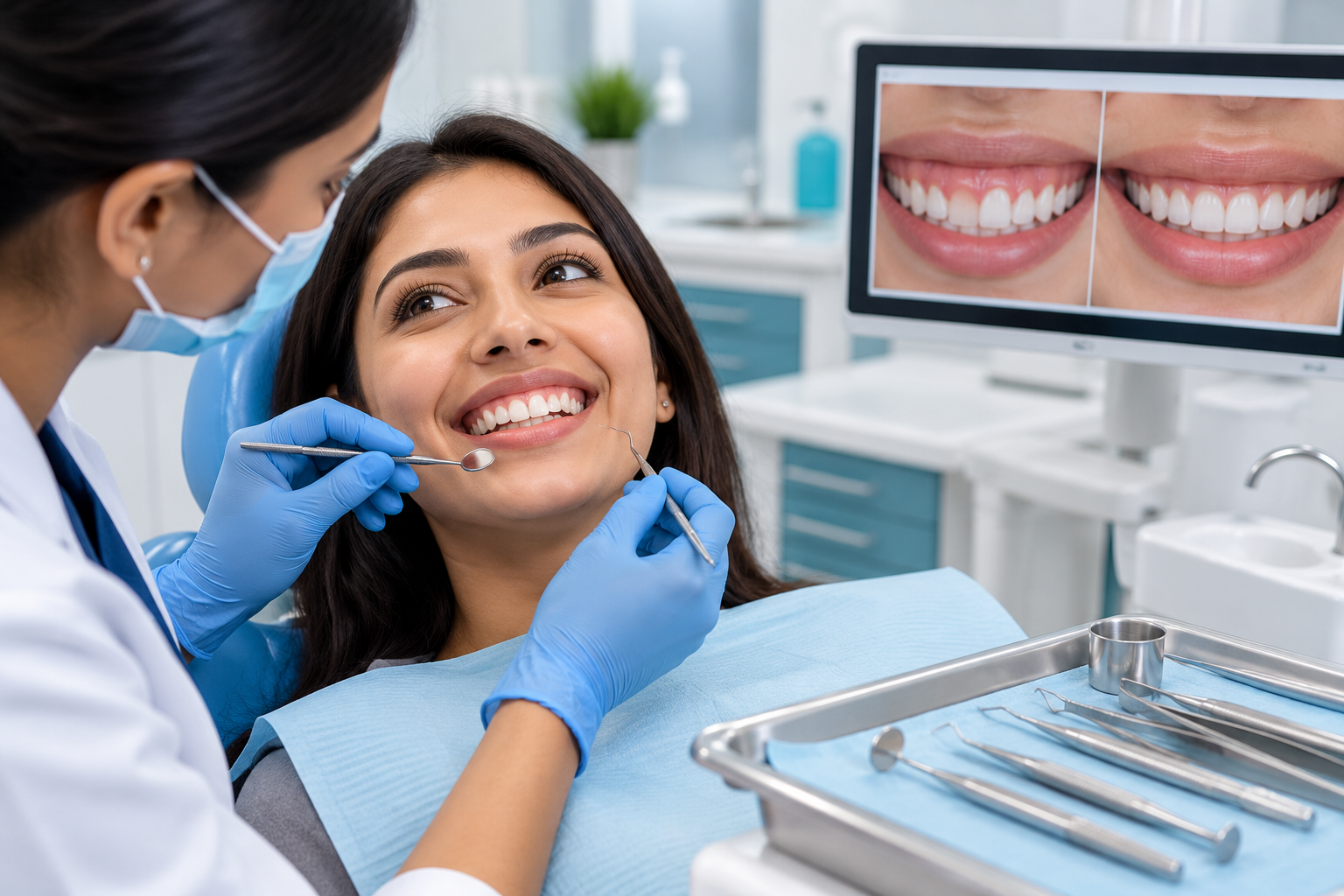
If you feel that too much gum shows when you smile, you may be exploring gummy smile treatment. The right approach depends on why your gums are visible, rather than how your smile looks in a photograph. Gum tissue, tooth position, upper-lip movement and jaw structure can all contribute.
For patients in Nigdi, Pune and Pimpri Chinchwad (PCMC), a dental consultation is the first step towards understanding the options. This guide explains gummy smile correction, when surgery may be considered, and what to expect during recovery.
What Is a Gummy Smile?
A gummy smile, also called excessive gingival display, describes a smile that reveals a noticeable amount of gum above the upper teeth. It is not automatically a dental disease. Many people have healthy teeth and gums and choose treatment only because they would prefer different smile proportions.
Your comfort matters. Treatment should reflect your goals while protecting healthy tissue, tooth support and function. There is no single smile shape that everyone needs to achieve.
What Causes a Gummy Smile?
Extra Gum Coverage or Gum Enlargement
Sometimes, gums cover more of the natural tooth surface than expected, making teeth appear short. This can occur with altered passive eruption. Swollen gums caused by plaque-related inflammation can also increase gum visibility. Certain medicines may contribute to gum enlargement; never stop prescribed medication without consulting its prescriber.
Tooth Position and Bite
Upper front teeth that have moved downwards, an uneven bite, or tooth wear may affect the relationship between teeth and gums. In these situations, removing gum tissue alone may not address the underlying cause.
Upper-Lip Movement and Jaw Structure
A short upper lip or a lip that rises substantially during smiling can expose more gum. Greater vertical height of the upper jaw may also contribute. Several causes can occur together, so a careful assessment is essential before selecting treatment.
How a Gummy Smile Dentist Assesses Your Smile
A gummy smile dentist assesses your smile at rest and during movement. The consultation may include photographs, gum measurements, a bite examination, and X-rays when clinically indicated. Your dentist checks tooth proportions, gum health, lip movement and supporting bone.
Bring a list of medicines, relevant health conditions and previous dental treatments. Explain what concerns you and whether you prefer a temporary option or a longer-term change. Ask about alternatives, risks and the option of leaving a healthy smile untreated.
Gummy Smile Treatment Options
Managing Gum Inflammation First
If swelling contributes to gum visibility, improving oral hygiene and treating gum disease may be the priority. Professional cleaning and appropriate periodontal care address inflammation before cosmetic treatment is planned. Explore our teeth cleaning and gum disease treatment information.
Gum Contouring and Crown Lengthening
Gum contouring reshapes excess gum tissue in suitable cases. Crown lengthening may involve both gum reshaping and adjustment of supporting bone to expose more natural tooth structure. The choice depends on anatomy and the space needed for healthy gum attachment. The American Academy of Periodontology describes crown lengthening as an option when excess tissue covers teeth.
A laser may be used for selected soft-tissue procedures, but it is a tool rather than a solution for every gummy smile. It cannot independently correct excessive jaw height or tooth-position problems. Read about laser gum treatment and discuss its suitability during your examination.
Orthodontic Treatment
Braces or aligners may help when tooth position or bite contributes to gum display. Some cases require additional orthodontic techniques and specialist planning. Treatment usually involves a series of visits; suitability cannot be confirmed from appearance alone. Our aligners and orthodontic treatment page explains related care.
Botulinum Toxin for Selected Lip-Related Cases
Botulinum toxin injections may temporarily reduce excessive upper-lip movement in suitable adults. They do not remove gum tissue or change jaw structure. Effects wear off, so maintaining the result may require repeat treatment. A systematic review of botulinum toxin treatment supports its potential role while recognising variation in results.
Discuss eligibility, local approval status, medical history, possible smile asymmetry and other adverse effects with a qualified clinician. Confirm whether this option is available at your chosen clinic.
When Is Gummy Smile Surgery Considered?
Lip Repositioning
Lip repositioning surgery may limit upper-lip elevation in selected cases. It changes soft tissue inside the upper lip rather than correcting the jaw. Relapse can occur, and longer-term stability varies. Research on lip repositioning outcomes highlights the importance of discussing expectations and the available evidence.
Jaw Surgery
When excessive upper-jaw height is a major cause, an orthodontist and oral and maxillofacial surgeon may assess the need for orthognathic surgery. This is a substantial procedure requiring coordinated planning, often with orthodontics. It is not appropriate for every patient seeking cosmetic improvement.
Gummy smile surgery should be recommended after diagnosis and informed discussion. Potential concerns include bleeding, infection, sensitivity, altered gum levels or relapse, depending on the procedure. Ask how the proposed treatment addresses your specific cause.
Recovery and Aftercare
Recovery differs between injections, gum surgery, lip procedures and jaw surgery. Following limited gum contouring, early healing may take around a week, while more extensive treatment can require longer. Final tissue settling and any subsequent restorations may need additional time. Follow your treating clinician's timeline.
After gum surgery, choose soft foods, protect the treated area and follow instructions for brushing, rinsing and prescribed medicines. Avoid smoking and ask when exercise can resume. Attend follow-up appointments even if your smile already appears improved.
Contact your clinician promptly for persistent bleeding, increasing swelling, fever, pus or severe pain. These signs need assessment rather than reassurance from online photographs. Cleveland Clinic's gum contouring guidance explains typical recovery and warning signs.
Planning Treatment in Nigdi, Pune and PCMC
Face N Dental Hospital in Nigdi provides gum care and cosmetic dental treatment for patients seeking gummy smile correction in Pune and Pimpri Chinchwad (PCMC). Our dental team assesses your gum health, tooth proportions, bite and lip movement to plan suitable care. Depending on the cause, treatment planning may include gum treatment, orthodontic care or specialist evaluation for surgical options.
At Face N Dental, your consultation includes a discussion of the recommended approach, appointment schedule, recovery and expected costs. The treatment plan depends on your diagnosis and individual needs. Patients travelling from Pune or PCMC can discuss follow-up visits and recovery arrangements with our team before proceeding.
Frequently Asked Questions
1. What is the best gummy smile treatment?
The best option addresses the cause. Gum coverage, lip movement, tooth position and jaw height need different approaches. Your examination determines which treatment, or combination, is appropriate.
2. Is a gummy smile unhealthy?
Not necessarily. Gum visibility can be a normal variation. However, bleeding, swelling or sudden changes should be checked for an underlying dental problem.
3. Can gummy smile correction be done without surgery?
Sometimes. Treating inflammation, orthodontics or temporary injections may help selected patients. They are not interchangeable and may not address every cause.
4. Does laser treatment work for everyone?
No. Lasers can help reshape suitable soft tissue, but they do not correct jaw proportions or all tooth-position issues. Diagnosis comes first.
5. Is gummy smile surgery painful?
The clinician discusses anaesthesia and comfort measures beforehand. Soreness can occur afterwards; its extent depends on the procedure. Ask for a personalised pain-management plan.
6. Are the results permanent?
Some structural treatments can provide lasting changes, but relapse or tissue changes remain possible. Injection effects are temporary. No procedure guarantees lifelong results.
7. How soon can I return to work?
This depends on the treatment and your recovery. Limited gum procedures usually require less downtime than jaw surgery. Confirm a realistic schedule with your clinician.
8. Can braces or aligners help?
They may help when tooth position contributes. An orthodontic assessment is needed; some patients require combined treatment rather than aligners alone.
9. Will I need crowns or veneers?
Not always. Healthy natural teeth may not need restorations. Crowns or veneers should have a clear indication, with benefits and tooth preparation explained beforehand.
10. Where can I seek assessment in Nigdi or PCMC?
Contact Face N Dental Hospital in Nigdi to arrange a dental consultation. Ask which options are suitable, which are available, and whether specialist referral is needed.
Discuss Your Smile With Face N Dental Hospital
Considering gummy smile treatment in Nigdi, Pune or Pimpri Chinchwad? Start with an assessment of your teeth, gums, lip movement and bite. Discuss your goals with Face N Dental Hospital and request a treatment plan that explains suitability, recovery and costs.
Call +91 8817000999 to request an appointment. You can also discuss our cosmetic dentistry services during your visit.